Avoid These Renovation Cost Overruns
Cost overruns can erode renovation ROI and delay sale readiness in Denver. Riley Construction outlines common causes and prevention strategies, from contingency planning to contract clarity. Call 17206053614 for a pre-construction review that reduces the likelihood of budget surprises. Proactive measures keep projects on schedule and on budget.
Renovations are a common way to boost home value and speed up a sale, but even well-intentioned projects can stumble when costs escalate. Riley Construction helps Denver homeowners and investors understand how overruns occur and, more importantly, how to avoid these renovation cost overruns so the work increases net proceeds rather than eroding them. A targeted pre-construction review can identify risks, align expectations, and preserve your timeline and return on investment.
Why cost overruns matter for Denver sellers and investors
In a market like Denver, where neighborhood demand and property values can shift quickly, a delayed sale or a budget-bloated renovation can reduce options and profits. Time on market increases holding costs-mortgage payments, taxes, utilities, and insurance-and those expenses compound while repairs drag on. Even a modest 10% overrun on a large remodel can wipe out anticipated profit margins and deter buyers who expect move-in ready properties.
Beyond direct dollars, overruns create indirect costs that impact sale readiness. When work extends past planned completion, staging, photography, and listing schedules shift. Buyers and their agents notice incomplete finishes and rushed workmanship, which can lead to lower offers or longer negotiation cycles. Protecting both schedule and scope is essential to converting an investment into a timely, profitable sale.
Common causes of renovation cost overruns
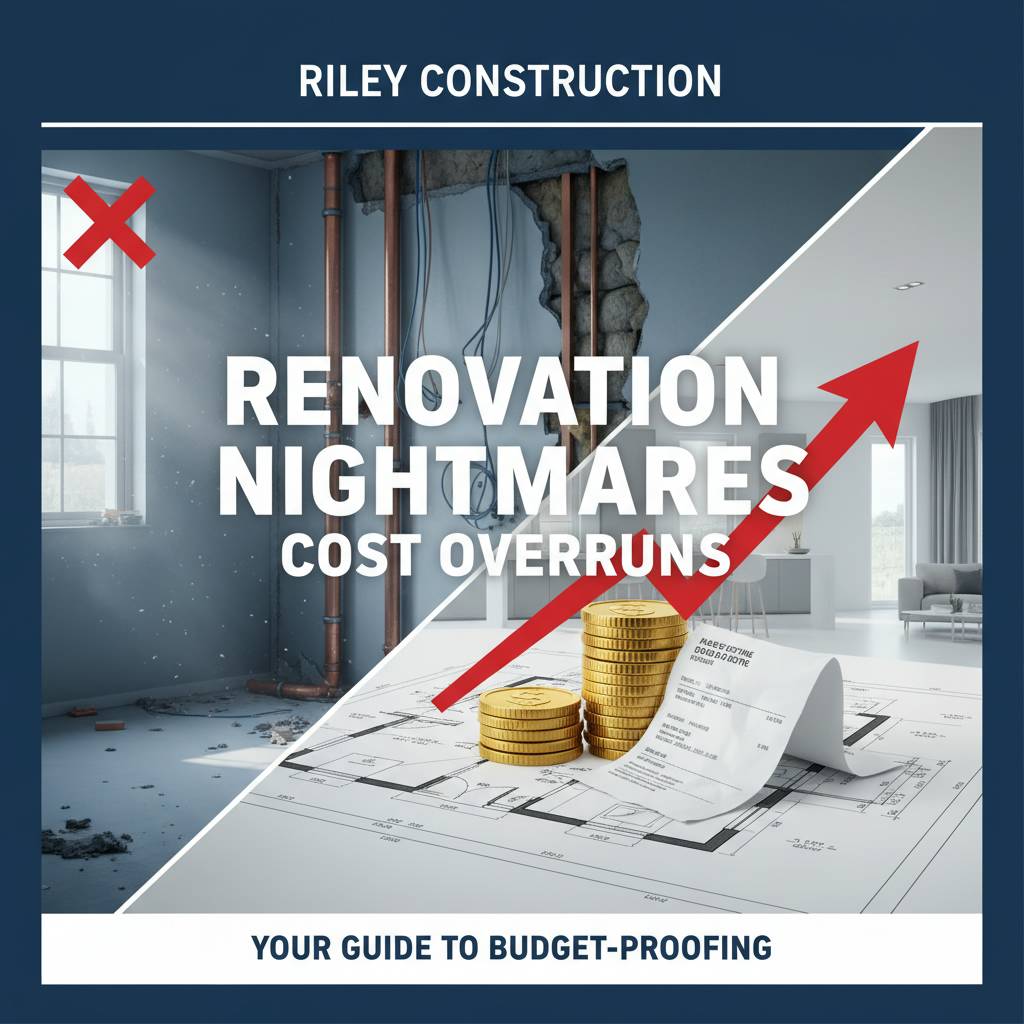 Understanding where projects go wrong helps you guard against the most frequent pitfalls. Denver projects have their own local challenges-older homes often contain hidden conditions, permit requirements vary by jurisdiction, and supply chain fluctuations can affect material availability and price. Below are the top causes of overruns and brief explanations of why they derail budgets.
- Hidden conditions: Unexpected structural issues, water damage, asbestos, or outdated wiring often surface once walls are opened. These discoveries require immediate remediation and can add significant labor and materials costs.
- Scope creep: Changing decisions midstream-upgrading finishes, expanding a design, or adding items-creates change orders that increase both cost and time. Without strict scope control, budgets drift upward quickly.
- Poor estimating: Inaccurate initial estimates, often from optimistic bidding or incomplete plans, fail to capture real costs for labor, material, or specialized trades common in Denver neighborhoods.
- Permitting and inspections delays: Unanticipated permit requirements or failed inspections cause stoppages. Each day of delay adds to holding costs and can cascade into contractor re-mobilization expenses.
- Material price volatility: Prices for lumber, appliances, and finishes can fluctuate. If contracts don't address price escalations, owners may be hit with higher bills mid-project.
- Scheduling conflicts: Poor sequencing of trades or overbooked subcontractors causes idle time on site and extended timelines that add overhead and supervision costs.
- Communication breakdowns: When owners, designers, and contractors are not aligned, assumptions lead to rework and disputes that increase cost and delay completion.
Financial and timeline impacts on ROI and sale readiness
Cost overruns reduce net proceeds in direct and measurable ways. A renovation budget that grows from $40,000 to $60,000 without a corresponding increase in sale price shrinks equity and can reduce return by hundreds or thousands of dollars. For investors flipping homes, this erosion of margin may turn a profitable deal into a loss. For primary sellers, the increased investment may not be fully recouped through higher offers, particularly if the market shifts between renovation start and sale listing.
Timeline overruns magnify those effects. Every additional week of construction typically adds costs: financing interest, utilities, property management, and potential rent loss for investors. Buyers are often price-sensitive to time-if completion slips, offers may be lower or buyers may withdraw. Efficient, predictable project delivery protects both financial outcomes and market credibility.
Prevention strategies that actually work
Preventing overruns starts well before demolition. A disciplined approach to planning, documentation, and risk allocation reduces surprises and keeps projects on schedule. The sections below outline core strategies that homeowners and investors should adopt as standard practice on every Denver renovation.
Contingency planning and realistic budgets
Include a contingency that reflects the type and age of the property. For typical Denver renovations, a contingency of 10%-20% is prudent; older homes with known deferred maintenance may merit a higher cushion. Contingency funds are not a license to overspend-they are protection against genuine unknowns discovered during construction. Allocate contingencies by category (structural, mechanical, finishes) so you can track how reserves are used and decide when to adjust scope if funds are depleted.
Crystal-clear contracts and scope documents
Contract clarity prevents argument and cost creep. Your contract should include detailed scope descriptions, material allowances with specific brands or quality levels, a payment schedule tied to milestones, procedures for change orders, and specified remedies for delays. Clear expectations around cleanup, warranty periods, and punch-list completion reduce disagreement at closeout. When contract language is specific, both parties have less room for interpretation that leads to added charges.
Accurate estimating and third-party reviews
Use multiple bids and validate estimates with a third-party pre-construction review. A high-quality estimate separates materials, labor, permits, and allowances, and identifies trade sequencing constraints. An independent review flags omissions or optimistic line-items so you can adjust the budget or scope before contracts are signed. This step is particularly valuable in Denver, where local labor and permit norms may differ from national averages.
What a thorough pre-construction review covers
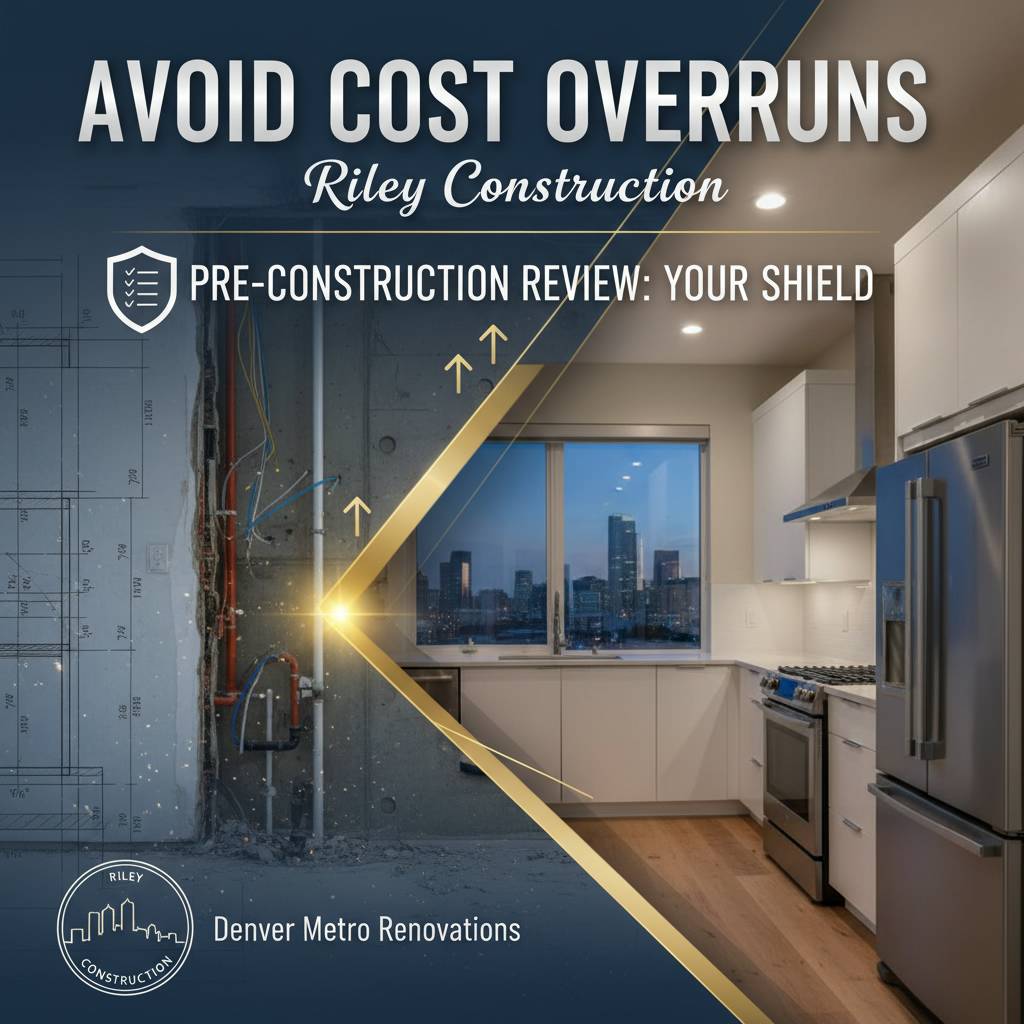 A professional pre-construction review, like the one offered by Riley Construction, examines site conditions, plans, and contractor proposals to reduce unknowns. The goal is to identify potential cost drivers early and propose practical mitigations so the budget and schedule are reliable.
| Area Reviewed | What We Check | Why It Matters |
|---|---|---|
| Site & existing conditions | Structural assessments, moisture checks, hidden systems | Finds issues that otherwise become expensive surprises |
| Permits & code | Local permit pathways, probable timelines, inspection triggers | Reduces stoppages and prevents rework from failed inspections |
| Estimates & allowances | Cross-checked material costs and labor hours | Creates realistic budget with itemized contingencies |
During a pre-construction review we also validate contractor qualifications, check subcontractor availability, and confirm material lead times. For example, an appliance or specialty window with an 8-12 week lead time can either be ordered early or swapped for a local alternative to preserve schedule. Small, proactive decisions like these reduce the chance of expensive, time-consuming workarounds later.
Practical, actionable controls you can implement today
There are concrete steps homeowners and investors can implement immediately to minimize risk. These measures are simple to adopt and make a material difference to outcomes, especially when enforced consistently across projects.
- Document everything: Keep a project binder (digital or physical) with contracts, change orders, and permit documents. Require written approvals for any scope change.
- Lock allowances: Specify finish allowances (e.g., tile, faucet, lighting) with price bands and brand options. If selections exceed the allowance, a signed change order should authorize the difference.
- Hold a pre-construction kickoff: Convene the owner, contractor, designer, and primary subs to review schedule, access, and site safety. Align on milestones and communication cadence.
- Schedule inspections early: Reserve time with building departments or hire a permit expeditor familiar with Denver jurisdictions to avoid permit bottlenecks.
- Track costs weekly: Reconcile actual spend to estimate every week. Spotting a pattern of overspend early allows corrective action before contingency reserves are exhausted.
Case study: small adjustments that avoided a major overrun
A Denver investor planned a full kitchen and two-bath remodel with an initial estimate of $75,000. During a pre-construction review, Riley Construction identified two high-risk items: an outdated gas line that required relocation and a specialty hood fan with a 10-week lead time. By specifying a local alternative for the hood and reallocating $6,000 from finishes into mechanical work, the project avoided a two-month delay and a likely $12,000 re-bid for emergency mechanical modifications.
When the contractor opened the wall, asbestos-free findings confirmed the choice to reallocate funds rather than postpone. The project completed on schedule and closed within 3% of the revised budget. The investor listed the property immediately and captured a market-responsive sale price that preserved intended ROI-an outcome that would have been jeopardized by the delay and surprise costs had the pre-construction review not occurred.
Checklist for Denver homeowners and investors
Use this short checklist to guide your next renovation. These items reduce the most common sources of overruns and keep your project aligned with the intended outcome: a timely, profitable sale-ready property.

- Obtain at least three detailed bids and compare line-by-line.
- Include a 10%-20% contingency based on property age and condition.
- Confirm material lead times and order long-lead items early.
- Require written change orders with cost and schedule implications.
- Schedule a pre-construction review and on-site walkthrough before signing contracts.
- Document responsibilities for permits, inspections, and code compliance.
- Set a weekly cost reconciliation and milestone reporting rhythm.
Frequently asked questions
Q: How much contingency should I plan for on a Denver remodel?
A: For most projects plan 10%-20%. For older homes or projects that involve structural or mechanical work, consider higher contingencies. The percentage should reflect known unknowns and the level of finish you expect to select during construction.
Q: Can a fixed-price contract eliminate the risk of overruns?
A: Fixed-price contracts reduce certain risks but are only effective if the scope is complete and accurate. Many fixed-price agreements include exclusions or allowances-if items are ambiguous, you can still incur change orders. Ensure the scope is comprehensive and that each allowance has clear selection deadlines to make fixed-price protections meaningful.
Q: When is the best time to do a pre-construction review?
A: Before you sign a general contractor contract and definitely before demolition. Early review maximizes the ability to alter scope, adjust materials, and negotiate realistic timelines without costly rework.
Take the next step to avoid surprises
Proactive planning, contract clarity, and an early pre-construction review are the most reliable ways to avoid these renovation cost overruns and keep your Denver project on schedule. Riley Construction offers experience evaluating local permit processes, contractor estimates, and site-specific risks so owners can move confidently from design to completion.
Call 17206053614 today for a pre-construction review that prioritizes protecting your budget, timeline, and sale readiness. A short conversation now can prevent weeks of delay and tens of thousands in unexpected costs later.
To discuss a project walk-through or schedule an assessment, contact Riley Construction. We look forward to helping you preserve ROI and reach the market on time. Reach out to or our team at 17206053614.