Timeline For Value-Oriented Renovations
A realistic timeline helps coordinate renovations to align with listing plans and maximize sale timing
Every successful sale starts long before photos go on the MLS. A realistic timeline helps coordinate renovations to align with listing plans and maximize sale timing, reduce holding costs, and present the home to buyers at peak readiness. Riley Construction develops project timelines that prioritize value-driving tasks and minimize market downtime, so improvements happen in the right order and the house is ready when the market opportunity arrives. Call 17206053614 to get a timeline estimate based on scope and local permitting processes.
We approach each property with the market window and resale objectives in mind. A timeline is more than dates on a calendar - it is a sequencing strategy that balances contractor availability, permit lead times, staging needs, and financing constraints. When those elements are aligned, renovations accentuate the home's strongest features rather than interrupting them, and you maximize return on investment while minimizing the risk of sitting on the market longer than intended.
Why a careful timeline matters for value-oriented renovations
Owners often focus on which upgrades to make and forget how scheduling decisions affect net proceeds. A well-built timeline translates renovation choices into predictable cash flow: it limits carrying costs, avoids rushed decisions near listing, and prevents scope creep that can erode profits. For sellers targeting specific buyer segments, timing determines whether an upgrade will be noticed and appreciated - for example, finishing a kitchen refresh three weeks before listing gives photographers and stagers time to showcase the space under ideal conditions.
Timing also protects resale value by ensuring that high-impact projects are completed first. Value-oriented renovations are not the same as a wishlist; they are a prioritized set of tasks with measurable return potential. When sequencing is wrong - say, investing heavily in landscaping while the interior still needs visible repairs - buyers may discount the property or request concessions. A realistic timeline ensures higher-return tasks are front-loaded and lower-impact items are scheduled only if time and budget allow.
How Riley Construction builds timelines that prioritize value-driving tasks
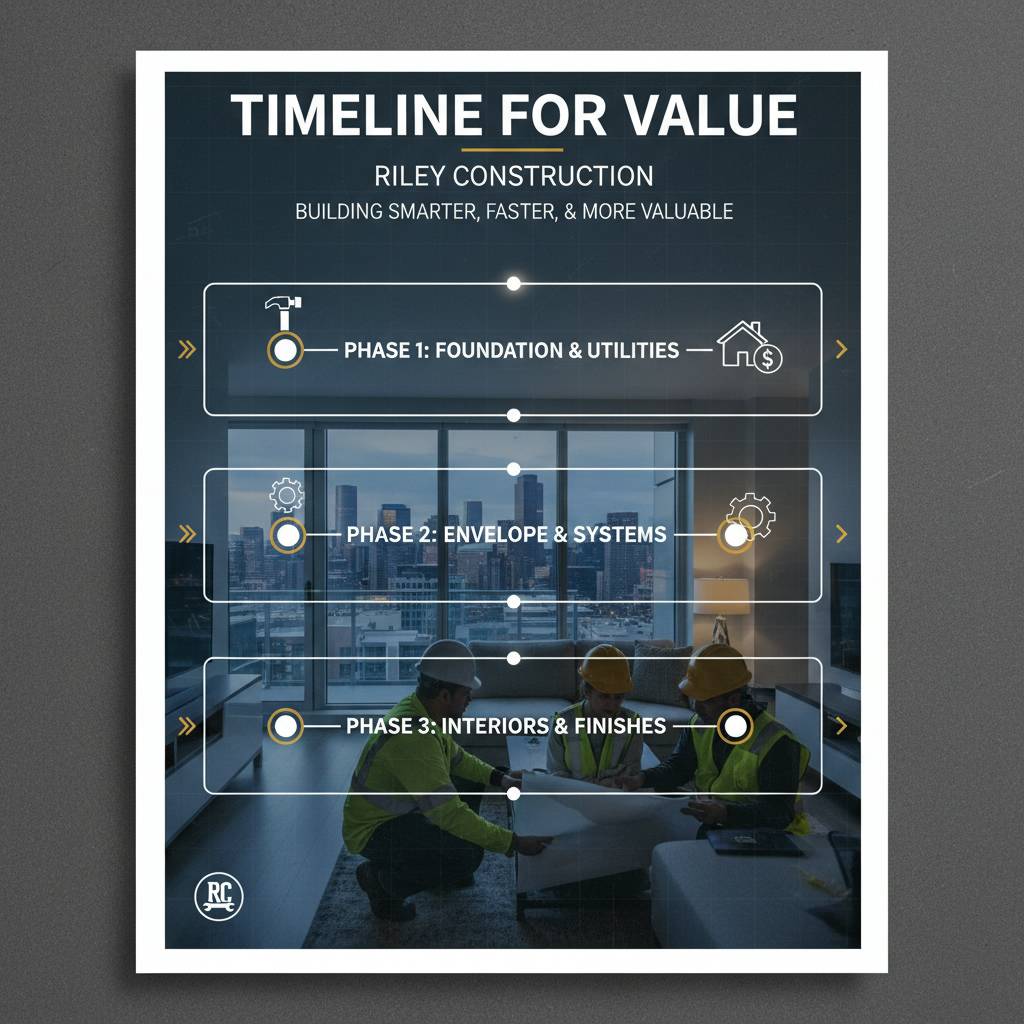 We start by assessing condition, neighborhood expectations, and comparable sales to identify the highest-value improvements. That assessment becomes the backbone of a timeline: tasks that most influence buyer perception and offer price are scheduled first, with contingency buffers built around permitting and contractor milestones. The result is a pragmatic plan that balances speed and quality while preserving budget discipline.
Key elements in our timeline methodology include detailed sequencing, parallel tasking where possible, and contractual protections for start and finish dates. Sequencing reduces rework - for example, completing structural repairs before surface finishes - while parallel tasking allows independent trades to work simultaneously in different areas, trimming total calendar time without sacrificing workmanship.
- Assessment and priority list: identify value-driving work and "nice-to-have" items.
- Permitting and approvals: map required municipal steps and expected lead times.
- Contractor scheduling: secure crew windows and stagger subcontractors to avoid idle time.
- Contingency planning: include realistic buffers for weather, supplier delays, and inspections.
Throughout the project, Riley Construction monitors milestones and communicates status updates, keeping owners and listing agents informed so marketing timelines align with physical readiness. If delays occur, we recommend evidence-based adjustments, such as deferring lower-impact tasks or shifting staging and photography dates rather than accelerating costly last-minute work.
Typical timeline examples by renovation scope
While every property is different, having benchmark timelines helps set expectations early. Below are representative timelines for common scopes of work focused on maximizing value rather than exhaustive upgrades. These timelines assume reasonable contractor availability and standard municipal permit processes; local factors can lengthen or shorten these windows.
| Scope | Typical duration | Representative cost range | Primary value drivers |
|---|---|---|---|
| Minor refresh (paint, flooring, fixtures) | 2-4 weeks | $2,500-$7,500 | First impressions, photos, market readiness |
| Mid-level update (kitchen cosmetics, bathrooms, smart systems) | 4-10 weeks | $15,000-$60,000 | Modernized look, improved functionality, market comparables |
| Major renovation (kitchen remodel, structural changes) | 8-20 weeks | $75,000-$250,000 | Floor plan improvement, highest price impact |
For a minor refresh you can often move quickly because permitting is minimal and crews can work in occupied homes without extensive protective measures. A mid-level update typically requires greater coordination for demolition, material lead times, and trade sequencing. Major renovations should always include a detailed preconstruction schedule and a conservative buffer to accommodate inspections and municipal review.
As an example case study: a suburban three-bedroom home needed a mid-level kitchen update and cosmetic refresh to reach comparable sales in its price band. By sequencing demolition in week one, ordering long-lead items on day one, and overlapping painting and trim installation in week three, the project finished in nine weeks total - yielding a listing within two weeks of completion and an offer above the seller's target price. That outcome hinged on prioritizing high-impact tasks and avoiding unnecessary upgrades that would have extended the schedule.
Minimizing market downtime: strategies that reduce carrying costs
Market downtime is expensive. Holding a property longer because a renovation missed its planned completion date can add thousands in mortgage, tax, insurance, and utility expenses. To reduce these carry costs, we emphasize practical strategies: compress the timeline without sacrificing quality, work in parallel where safe and efficient, and limit the in-progress period before the home is market-ready for professional photography and showings.
- Prioritize quick wins: cosmetic updates that dramatically improve photos and first impressions.
- Bundle tasks by trade: schedule all painting once instead of multiple touch-ups over weeks.
- Coordinate staging and cleaning in the final week to avoid repeat mobilization fees.
Another effective approach is conditional staging: prepare the house to be shown even if a small list of low-impact tasks remains. When staged correctly, properties can go live while finishing touches are completed on a predictable schedule. This hybrid approach shortens total off-market time while maintaining buyer confidence that the home is cared for and near move-in condition.
Permits, inspections, and local variables that affect scheduling
 Permits and inspections are often the least predictable portion of a timeline. Some simple cosmetic projects need no permits, while structural work and many kitchen or bathroom reconfigurations do. Knowing which projects trigger municipal review early in the planning phase prevents surprises that push completion dates beyond listing windows.
- Cosmetic projects (paint, flooring): usually no permit required, 0-2 days to confirm.
- Minor plumbing or electrical: may need licensed sign-off, 1-3 weeks for inspection scheduling.
- Structural alterations or major hookups: permit processing can take 2-8 weeks depending on jurisdiction.
Riley Construction maintains current permit knowledge across jurisdictions we serve and works with experienced permit expeditors when needed. We build realistic lead times for municipal review into every schedule and advise clients how to sequence permit-dependent tasks so inspections occur at logical project milestones rather than forcing mid-project stoppages.
Contractor coordination, procurement, and contingency planning
Realistic timelines require reliable trade partners and proactive procurement. Lead times for countertops, tile, appliances, and hardware can exceed weeks; securing these items early prevents idle crew days and expensive rush charges. Our project managers schedule material orders based on committed start dates and confirm deliveries to align with trade sequencing.
Contingency planning is equally important. We recommend adding a time buffer of at least 10-20% for mid-level projects and 20-35% for major renovations depending on permit complexity and supply chain risk. These contingencies are not padding for poor planning - they are realistic allowances for weather, subcontractor illness, or inspection scheduling that commonly affect calendars in the field.
Frequently asked questions
How long before listing should I start renovations?
Begin with a three-step approach: assess high-value needs, define your finish date based on comparable sales activity, and back-schedule work from that finish date. For minor refreshes, start 4-6 weeks before listing. For mid-level updates, plan 8-12 weeks. For major renovations, begin 3-6 months in advance depending on scope and permits. Your market's seasonality and 's availability can also affect these windows.
Can some renovation work happen after the home is on the market?
Yes, limited work can continue after listing if it does not materially impair showings or buyer perception. Examples include final landscaping details, minor touch-ups, or completing a secondary room. However, critical items that influence offers - kitchen completion, main bathroom updates, necessary repairs - should be finished before formal marketing to avoid buyers discounting the price or asking for concessions.
What are realistic contingencies for unexpected issues?
Common contingencies include an allowance for latent defects (like unforeseen water damage uncovered during demolition), weather delays, and supply chain shortages. Financially, it's prudent to set aside 10-20% of the renovation budget for contingencies. Timewise, allow 10-35% additional schedule buffer as noted earlier, adjusted to the project's complexity and your risk tolerance.
How does a timeline affect staging and photography scheduling?
Staging and photography should be the last scheduled items in a timeline and are only needed once spaces are fully finished, cleaned, and furnished. Book staging and a photographer as soon as your expected completion date is firm, and include a 3-5 day buffer for final touch-ups. That approach prevents rescheduling fees and ensures marketing assets reflect the property's best condition.
Closing: get a timeline estimate and reduce market risk
A realistic, prioritized timeline is one of the most powerful tools for sellers who want to maximize net proceeds while minimizing market downtime. Riley Construction builds schedules that focus on value-driving renovations, coordinate permitting and contractors, and keep communication clear throughout the process. You'll get a focused plan that trades unnecessary upgrades for improvements that matter to buyers.
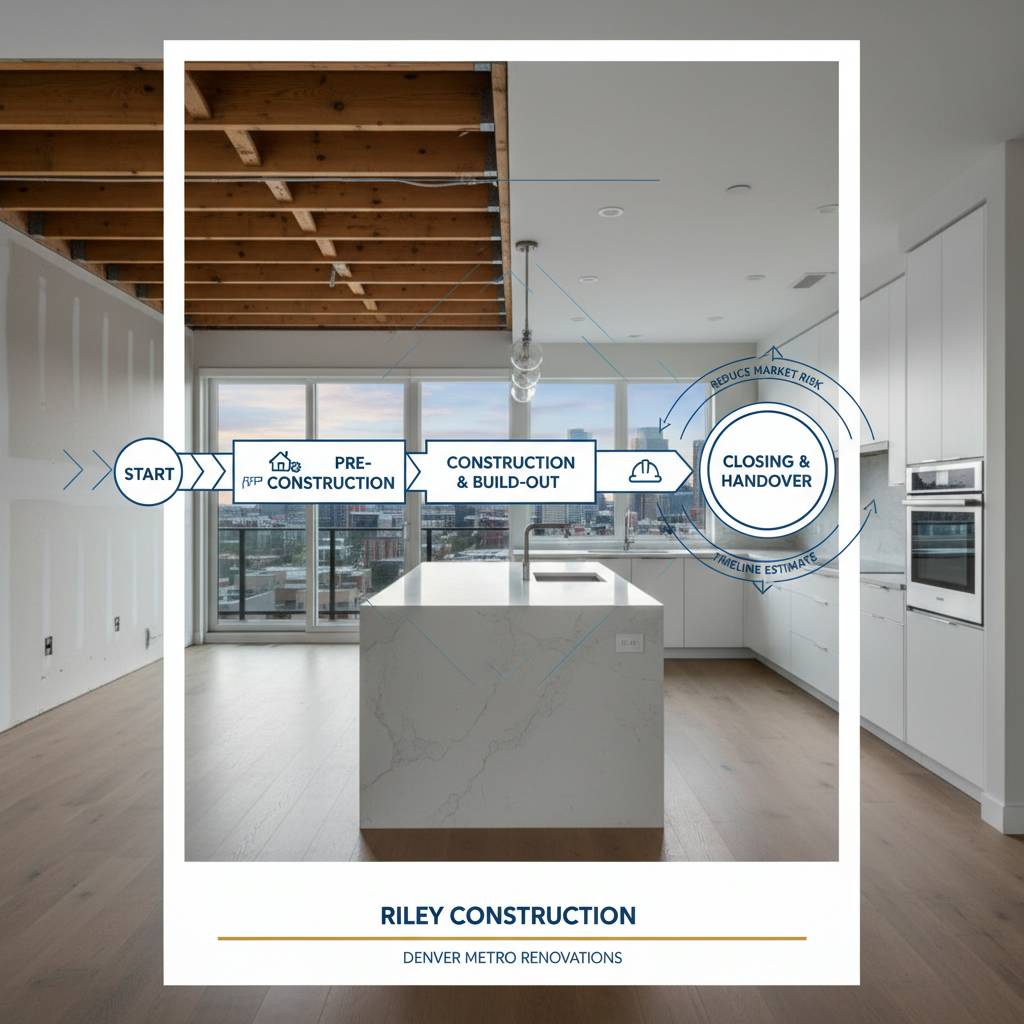
Ready to align renovations with your listing plans? Reach out to Riley Construction for a tailored timeline estimate and practical next steps. Call 17206053614 to discuss your scope and local permitting considerations; a clear schedule reduces carry costs and improves readiness for sale.