Will My Renovation Improve Appraisal Value
Homeowners often need clarity on whether planned renovations will raise appraisal values in Denver. Riley Construction evaluates proposed upgrades against comparable sales and appraisal standards to predict impact. Call 17206053614 to review your renovation scope and expected appraisal outcomes. This insight helps choose improvements that truly increase appraised value.
Introduction: Why homeowners ask will my renovation improve appraisal value
When homeowners begin planning updates, the most common practical question is simple: will my renovation improve appraisal value? In Denver's varied neighborhoods, the answer depends on the type of work, local market trends, and how appraisers weigh comparable sales. Riley Construction helps homeowners translate renovation plans into realistic appraisal expectations by measuring proposed changes against recent comps and current appraisal standards.
Understanding appraisal impact is more than just guessing at resale premiums. Appraisers follow defined approaches - sales comparison, cost, and income when relevant - and they rely on objective evidence. That means high-cost cosmetic upgrades don't automatically produce higher appraised values unless they align with buyer expectations and neighborhood norms. Our goal is to give you a clear, evidence-based projection so you can decide where to invest.
Before you spend money, consider a short consultation. Riley Construction will review your renovation scope, identify which improvements typically increase appraised value in your Denver submarket, and help you avoid common pitfalls. For a detailed review, call 17206053614 and we'll walk through comparable properties and likely appraisal adjustments for your project.
How appraisers evaluate renovations and their impact
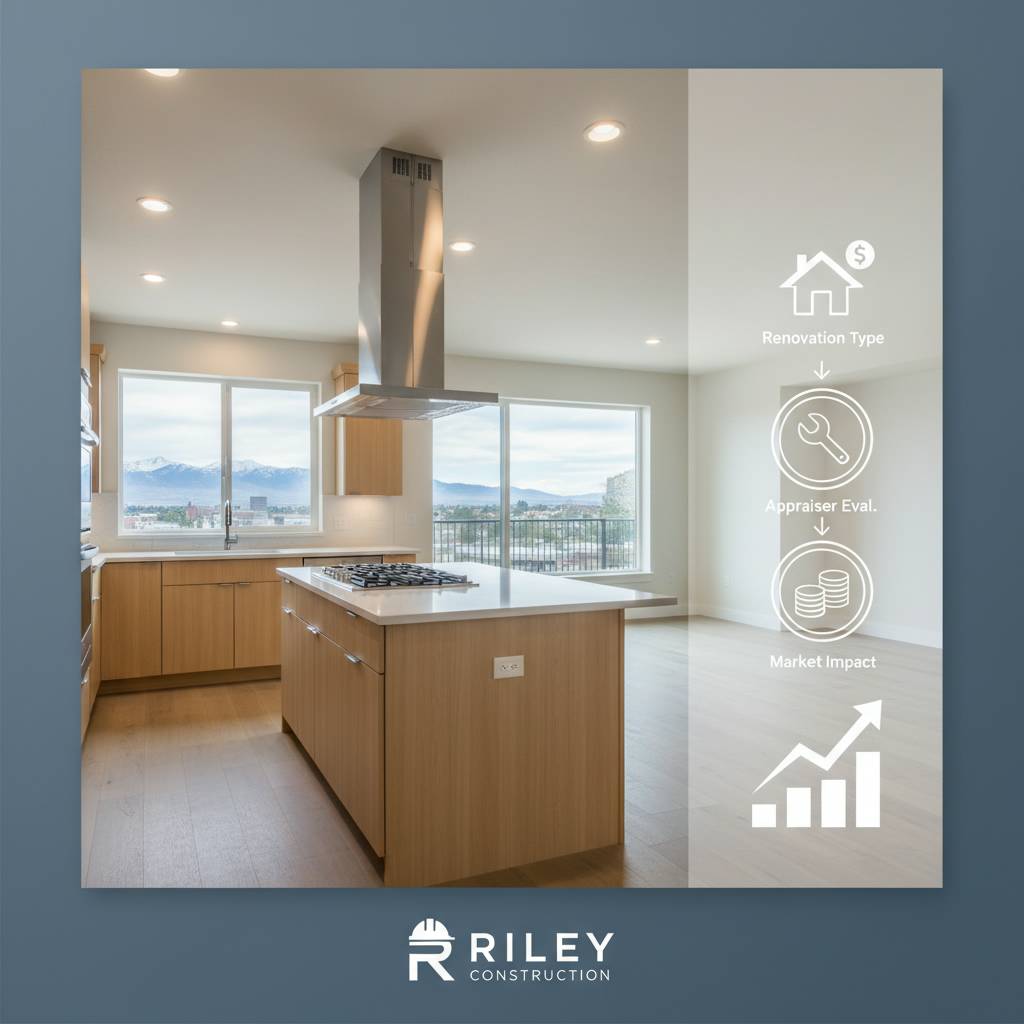 Appraisers primarily use the sales comparison approach in residential real estate, which means they look at what similar nearby homes have sold for and adjust for differences. Renovations matter when they make your home more comparable to higher-priced sales in your market. Appraisers consider the quality of workmanship, materials, and whether the updates are consistent with neighborhood expectations and the age of the property.
Beyond raw upgrades, appraisers factor in functional utility and marketability. A well-installed kitchen remodel with modern appliances and efficient layout often yields a measurable appraisal benefit because buyers value functionality. Conversely, niche or overly customized features that appeal to a narrow audience may not be recognized as adding full market value, even if you personally enjoy them.
Another important point is the timing and documentation of work. Appraisers give weight to permits, invoices, and before-and-after photos. Proper permits and professional installation signals quality and reduces risk in the appraiser's mind. We recommend keeping a folder of permits, contractor warranties, and receipts to present at appraisal time; and our team can help organize these materials for the appraiser's review.
Common renovations in Denver and their typical appraisal impact
Some projects consistently perform better than others when it comes to appraised value. In Denver, where buyers often prioritize energy efficiency, livable square footage, and updated kitchens and baths, certain upgrades are more likely to be reflected in appraisals. Below is a practical overview of popular renovation types and normal appraisal outcomes.
Remember that local market conditions - such as inventory levels, buyer demand, and recent comparable sales - will influence the magnitude of any appraisal adjustment. Small to mid-range improvements that bring your home up to local standards rarely fail to help, while luxury upgrades that push your property beyond neighborhood comparables may not be fully recognized.
| Renovation Type | Typical Appraisal Impact | Notes |
|---|---|---|
| Kitchen remodel (mid-range) | Moderate positive impact | Improves marketability when finishes match neighborhood quality; new appliances, counters, and layout help most. |
| Bathroom update | Small to moderate positive impact | Replacing fixtures and improving layout yields good returns; adding a full bath can add more value than cosmetic refresh. |
| Basement finishing | Moderate impact (depends on legal egress and code) | Adds livable square footage; must meet code and be reflected in comps to be fully credited. |
| Energy upgrades (windows, HVAC, insulation) | Small to moderate impact | Often seen favorably if well-documented; utility savings appeal to buyers and can be a selling point. |
| Luxury additions (high-end chef kitchen, master suite) | Variable - often limited by neighborhood ceiling | May not be fully credited if similar homes in area are lower specification. |
| Curb appeal/landscaping | Small immediate impact | Improves first impressions and may support a higher sale price, though appraisers treat it conservatively. |
Use this table as a guideline, not a guarantee. For example, a $20,000 kitchen refresh in a neighborhood where $40,000 updates are the norm will be interpreted differently than the same refresh in an area with lower baseline finishes. We analyze local comparable sales to calibrate expectations accurately.
Cost versus value: choosing improvements that pay off
Before committing to a renovation, weigh the likely appraisal benefit against the actual cost. Some projects have predictable returns: small bathroom updates, interior painting, and replacing worn flooring can improve perceived value without enormous expense. In contrast, high-cost luxury upgrades often offer lower percentage returns because they push your home above the neighborhood ceiling of comparable sales.
Consider these practical decision factors when prioritizing improvements: local comparable finishes, resale expectations for your price tier, and the time you expect to hold the property. If you plan to sell within a year, focus on cost-effective improvements that are widely appealing. If you plan to stay longer and personally benefit from specialized upgrades, the appraisal impact may be secondary to personal enjoyment.
Here are straightforward criteria we use to evaluate potential projects:
- Relevance to local buyer preferences and comparable homes.
- Cost-to-improvement ratio - projects with strong visual payoff per dollar often earn better appraisal recognition.
- Permits and code compliance - unpermitted work may be excluded or discounted.
- Market timing - in a seller's market, some upgrades may be less necessary; in a buyer's market, upgrades can help your price stand out.
Applying these criteria helps you allocate dollars where they increase both market appeal and appraised value. Riley Construction evaluates your renovation plan against recent comps and cost ranges to recommend the most effective investments for your situation.
Preparing for an appraisal: documentation, staging, and presentation
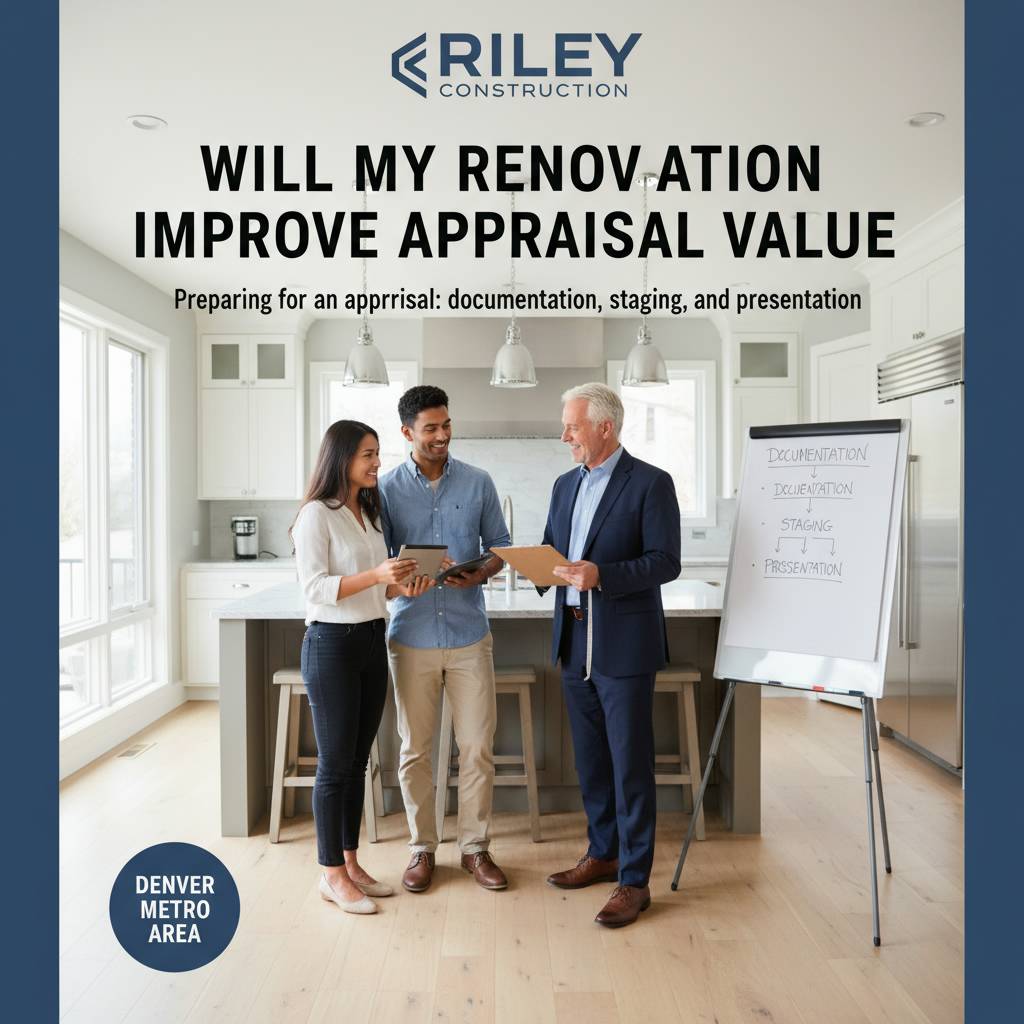 Proper preparation can influence how an appraiser documents improvements. Start by assembling permits, contractor contracts, and invoices. These items show the work was completed to code by licensed professionals and usually supports higher adjustments. Appraisers appreciate clear, organized documentation that ties improvements to verifiable costs and timelines.
Staging and clear access to upgraded areas also matter. An appraiser needs to inspect the property and see the improvements firsthand. Make sure spaces are accessible, clean, and that important features are highlighted without being intrusive. For items that are not easily seen-such as insulation or under-floor work-provide permits and photographs showing the work before completion when possible.
What to provide to the appraiser
- Copies of permits and final inspection approvals.
- Receipts and contractor invoices showing materials and labor.
- Before-and-after photos that are dated and clearly labeled.
- A list of comparable homes you believe are relevant, including recent sale dates and prices if you have them.
Riley Construction can prepare a concise renovation summary packet for the appraiser that highlights why specific upgrades should affect value based on comparable sales. Providing the right materials improves the likelihood that the appraiser will recognize the full benefit of well-done renovations.
Frequently asked questions and next steps
Q: How do I know if my neighborhood supports luxury upgrades? A: Examine recent sales of similar homes within a close radius and time frame. If luxury finishes are common among recent comps and sales prices reflect those finishes, appraisers will be more likely to credit high-end work. Riley Construction performs comp-driven analysis to determine realistic ceilings for your area.
Q: Will replacing appliances increase my appraised value? A: Replacing faulty appliances with new, mid-range units improves marketability and can support a modest appraisal adjustment, especially when the old appliances were a clear negative in comparables. High-end appliance upgrades may be partially recognized depending on neighborhood standards.
Q: What about unpermitted work I completed years ago? A: Unpermitted improvements are a red flag for appraisers and underwriters. They may be excluded or valued at a discount unless you can obtain retroactive permits and inspections. Prioritize obtaining proper permits where possible to protect both appraisal and resale value.
If you're asking will my renovation improve appraisal value for a specific project, the pragmatic next step is a focused review of your plans against local comparable sales. Riley Construction offers a review service that outlines likely appraisal adjustments, required documentation, and suggested scope changes that tend to produce measurable appraised value increases.
Call to review your renovation plan: For a clear, evidence-based projection of how your improvements will influence appraisal outcomes, contact Riley Construction at 17206053614. We'll analyze your renovation scope, compare it to recent Denver comps, and prepare a concise recommendations report you can take to contractors or your appraiser.
Short, practical next steps: gather permits and receipts, take dated before-and-after photos, and make a list of comparable homes you think relate to your property. Bring these to a consultation or send them to our team in advance for a faster, more accurate review.
Thank you for considering Riley Construction as your resource for renovation appraisal guidance. If you want a customized assessment or to schedule a walkthrough, please call 17206053614. We look forward to helping you choose improvements that genuinely increase appraised value and align with Denver market realities.